
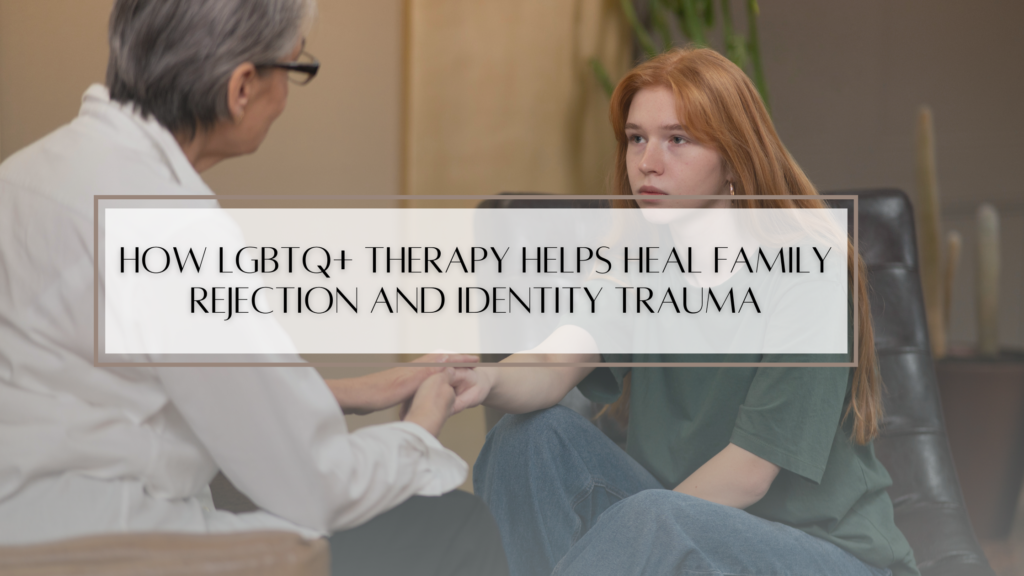
Family rejection can leave deep emotional wounds that extend far beyond childhood or adolescence. When the people who are supposed to provide love, safety, and acceptance reject or invalidate your identity, it can affect how you see yourself, your relationships, and your place in the world. Many LGBTQ+ adults continue to carry the impact of these experiences long after they occur. LGBTQ+ affirming therapy provides a space to process that pain, rebuild self-trust, and develop a stronger sense of self. Christina Wade, LCSW, provides LGBTQ+ affirming therapy in San Mateo, helping adults process the lasting impact of family rejection while rebuilding self-trust, emotional safety, and a stronger sense of identity.
Understanding Family Rejection and Identity Trauma
Family rejection is not always obvious. Sometimes it involves outright hostility, criticism, or exclusion. Other times, it appears in subtler ways, such as:
- Dismissing or questioning your identity
- Refusing to use your chosen name or pronouns
- Pressuring you to hide who you are
- Treating your identity as a phase
- Withdrawing emotional support
- Using religious or cultural beliefs to invalidate your experiences
Over time, these experiences can create what many therapists refer to as identity trauma. Instead of feeling accepted for who they are, individuals may learn to suppress parts of themselves to maintain relationships or avoid conflict.
How Family Rejection Can Affect You as an Adult
The effects of rejection often continue long after a person leaves home.

Many LGBTQ+ adults experience:
Chronic Self-Doubt
When your identity has been repeatedly questioned or criticized, it can become difficult to trust your own thoughts, feelings, and decisions.
Shame and Self-Criticism
Many people internalize negative messages they received from family members and begin treating themselves with the same harshness.
Anxiety and Hypervigilance
Growing up in an emotionally unsafe environment can make it difficult to relax or feel secure in relationships.
Difficulty Setting Boundaries
People who experienced rejection often become people-pleasers, fearing conflict or abandonment if they express their needs.
Relationship Challenges
Family experiences frequently shape attachment patterns, affecting intimacy, trust, and communication in adulthood.
How LGBTQ+ Therapy Creates a Safe Space for Healing
Before healing can happen, many people need a space where they no longer feel judged, questioned, or misunderstood.
LGBTQ+ affirming therapy provides an environment where:
- Your identity is respected and affirmed
- You do not need to educate your therapist about LGBTQ+ experiences
- Your emotions and experiences are taken seriously
- You can discuss difficult family dynamics openly
- Healing happens at a pace that feels safe
For many clients, simply being fully accepted can be a powerful part of the healing process.
How Therapy Helps You Rebuild Self-Trust
Family rejection often teaches people to doubt themselves.
Therapy helps challenge that pattern by helping clients:
- Recognize internalized negative beliefs
- Separate their identity from others’ opinions
- Develop self-compassion
- Trust their own emotions and experiences
- Build confidence in their decisions
Over time, many people begin to feel more secure in who they are rather than seeking constant validation from others.
How Therapy Helps Process Grief and Loss
One of the most overlooked aspects of family rejection is grief.
Many LGBTQ+ adults grieve:
- The family support they never received
- Relationships that changed after coming out
- Lost opportunities for connection
- The version of family they hoped to have
LGBTQ+ Therapy for Family Rejection creates space to acknowledge these losses rather than minimizing them. Processing grief can reduce emotional pain and make room for healing and growth.
How Therapy Helps Build Healthier Relationships
The impact of family rejection often shows up in friendships, romantic relationships, and even workplace interactions.
Therapy helps individuals:
- Identify unhealthy relationship patterns
- Develop healthier boundaries
- Improve communication skills
- Reduce fear of abandonment
- Build relationships based on authenticity rather than survival
As healing progresses, relationships often begin to feel safer and more fulfilling.
How Therapy Supports Identity Growth and Self-Acceptance
Many LGBTQ+ adults spend years hiding parts of themselves to stay safe or gain approval.
Therapy helps create space to:
- Explore identity without judgment
- Challenge shame-based beliefs
- Develop a stronger sense of self
- Feel more comfortable expressing authenticity
- Build confidence in personal values and goals
Healing is not about becoming someone new. It is about reconnecting with the person you have always been.
Why Work With Christina Wade?

Healing from family rejection often requires more than learning coping skills. It involves understanding how experiences of rejection shape relationships, emotional safety, and the way people relate to themselves. Christina Wade’s approach integrates evidence-based therapy with compassion, curiosity, and trauma-informed care to support lasting change.
Christina Wade, LCSW, has more than 20 years of experience helping adults navigate trauma, anxiety, shame, burnout, life transitions, and identity-related challenges. As a BIPOC lesbian therapist, she brings both professional expertise and lived understanding to her work with LGBTQ+ clients.
Christina’s approach is:
- LGBTQ+ affirming and trauma-informed
- Compassionate, collaborative, and non-judgmental
- Grounded in evidence-based practices
- Focused on helping clients reconnect with their authentic selves
- Respectful of each person’s unique experiences and goals
Whether you are working through family rejection, identity trauma, relationship difficulties, or self-esteem challenges, Christina provides a supportive space where healing can unfold at your own pace.
Final Thoughts
Family rejection and identity trauma can leave lasting emotional scars, but they do not have to define your future. LGBTQ+ affirming therapy can help you process painful experiences, rebuild self-trust, strengthen relationships, and develop a deeper sense of self-acceptance. Healing takes time, but you do not have to do it alone. If you’re looking for LGBTQ+ affirming therapy in San Mateo, Christina Wade, LCSW, provides LGBTQ+ affirming therapy in San Mateo for adults navigating family rejection, identity trauma, and related concerns. She offers a free 20–30 minute consultation so prospective clients can ask questions, learn more about her approach, and determine whether it’s the right fit.


