
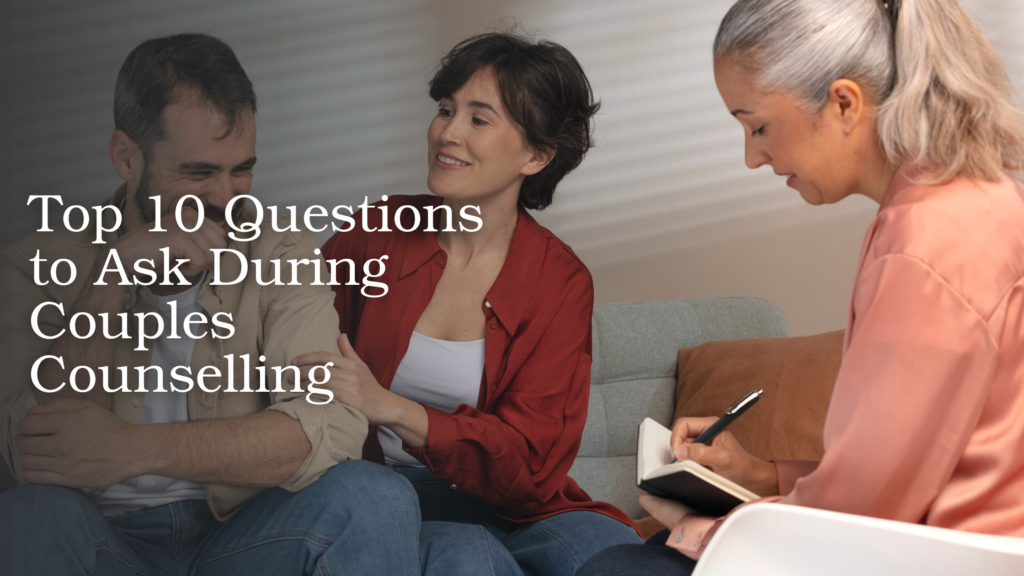
Couples counselling gives partners a safe space to understand each other more deeply, heal emotional wounds, and strengthen their bond. But many couples walk into therapy unsure of what to talk about. They know they want to improve the relationship, but they don’t always know what questions will help them get there.
The truth is, the questions you ask in t he therapy room can shape the direction of your healing. They open doors that may have stayed closed for years. They create emotional clarity. They help both partners express needs that might have gone unheard. And most importantly, they allow the therapist to guide you toward healthier patterns.
Whether you’re starting counselling for the first time or looking to deepen your ongoing sessions, these ten questions can spark powerful conversations and shift your relationship in meaningful ways. This guide will walk you through each question, share why it matters, and explain how therapy, especially with a skilled, warm, and emotionally attuned therapist like Christina Wade, LMHC, can help you explore the answers with honesty and confidence.

1. “What do we each need to feel emotionally safe in this relationship?”
Emotional safety is the foundation of a healthy partnership. Without it, communication becomes guarded, honesty feels risky, and vulnerability shuts down. Many couples never explicitly ask one another what emotional safety looks like for them—yet this question can transform how you show up for each other.
Emotional safety might mean:
- Feeling heard without judgment
- Knowing your feelings won’t be dismissed
- Trusting that conflict won’t escalate
- Knowing your partner won’t use vulnerabilities against you
In counselling, this question encourages both partners to articulate their emotional landscape. Christina often guides couples to identify specific behaviors that build emotional safety and those that break it. Once safety is restored, deeper healing becomes possible.
2. “How have the ways we communicate been helping or hurting our relationship?”
Most couples think they have a “communication problem,” but communication is rarely the real issue. It’s usually the patterns beneath communication that cause tension, tone, timing, assumptions, emotional history, or unspoken expectations.
Asking this question helps both partners reflect honestly on:
- Whether they interrupt
- Whether they listen to respond or listen to understand
- Whether conversations escalate unnecessarily
- Whether feelings are expressed or suppressed
In therapy, this becomes a non-defensive conversation with guidance from Christina, who helps partners understand each other’s communication style and shape healthier ways of talking and listening.
3. “What unresolved conflicts keep resurfacing, and why?”
Every couple has a few arguments that never seem to disappear. The same issue rises again, sometimes in different forms, but with the same emotional charge.
This question brings those patterns into the open.
Resurfacing conflicts often point to:
- Unmet needs
- Unspoken expectations
- Emotional wounds from the past
- Misunderstood intentions
- Differences in values or priorities
Therapy helps couples look beyond the argument itself and explore the deeper emotional meaning behind the conflict. Many couples find relief once they understand why the cycle repeats and how to stop it.
4. “What do we each need to feel loved and appreciated on a daily basis?”
Love languages matter, but emotional nourishment goes deeper than just categories. Many couples assume they know what makes their partner feel loved, but assumptions often miss the mark.
This question helps uncover:
- What gestures matter most
- What type of affection feels meaningful
- What appreciation looks like to each partner
- What daily habits build closeness
In therapy, Christina encourages partners to turn these insights into consistent actions, ensuring that love is not only felt, but expressed clearly and often.
5. “How do our individual histories influence how we show up in this relationship?”
Every partner carries emotional experiences from childhood, past relationships, and life challenges. These experiences shape attachment styles, communication habits, boundaries, and expectations.
This question brings emotional history into awareness without blame.
For example:
- Someone who grew up with criticism may be sensitive to feedback
- Someone raised in chaos may crave stability
- Someone who experienced abandonment may fear distance
- Someone who received little affection may struggle to express love
Christina uses trauma-informed and attachment-focused approaches to help partners understand these patterns. This creates empathy and reduces conflict rooted in misunderstandings.

6. “What boundaries do we need to protect our relationship?”
Boundaries are not walls; they are guidelines that keep a relationship healthy. Many couples lack clear boundaries with extended family, work, friendships, or social media.
This question helps couples identify:
- Where outside stressors intrude
- What behaviors feel disrespectful
- What expectations need clarity
- How to protect emotional space for the relationship
Discussing boundaries in therapy ensures that both partners understand each other’s needs and feel supported in upholding them.
7. “How can we repair hurt from the past without getting stuck in it?”
Some couples carry quiet resentment. Others carry deep emotional wounds—neglect, betrayal, broken promises, or hurtful words. Healing cannot happen unless the injury is acknowledged and processed.
This question helps couples explore:
- What hurts still linger
- What apologies are still missing
- What forgiveness might look like
- How to prevent old wounds from reopening
In counselling, Christina teaches repair strategies that emphasize accountability, emotional understanding, and rebuilding trust without dwelling endlessly on the past.
8. “What does a healthy future together look like for both of us?”
Many couples focus so much on fixing issues that they forget to dream together. But shared goals strengthen emotional connection.
Therapy encourages partners to explore:
- What kind of relationship they want
- What they hope to build together
- What emotional qualities they want to strengthen
- What life transitions they hope to navigate as a team
Partners often discover they want the same future, they just struggle to navigate the present.
9. “What patterns do we fall into during conflict, and how can we break them?”
Conflict patterns can be surprisingly predictable. One partner pursues, the other withdraws. One gets louder, the other shuts down. One wants resolution immediately, the other needs space.
This question helps the couple understand their dynamic as a system, not as two individuals “fighting wrong.”
Christina guides couples to:
- Identify triggers
- Understand their conflict style
- Pause before reacting
- Respond in ways that reduce escalation
- Build emotional regulation together
When couples learn to disrupt their unhealthy conflict patterns, their entire relationship becomes calmer and safer.
10. “How can we become a stronger team, not just two individuals coexisting?”
At the heart of every successful relationship lies teamwork. Not competition. Not scorekeeping. Not silent resentment. Teamwork.
This question helps couples redefine partnership.
In therapy, partners explore:
- How to support each other consistently
- How to value each other’s differences
- How to share responsibilities fairly
- How to communicate needs without criticism
- How to maintain closeness through life changes
Christina helps couples shift from “you versus me” to “us versus the problem.” That shift alone can change everything.
A Helpful Table: Questions and Their Purpose
| Question | Why It Matters in Therapy |
| Emotional safety | Builds trust and openness |
| Communication patterns | Prevents reactive conflict |
| Resurfacing issues | Reveals core needs |
| Feeling loved | Strengthens connection |
| Past influences | Builds empathy |
| Boundaries | Protects the relationship |
| Healing hurt | Enables long-term repair |
| Future vision | Creates shared goals |
| Conflict patterns | Reduces escalation |
| Partnership | Enhances teamwork |
Final Thoughts
Couples counselling is not just about addressing problems, it’s about rediscovering each other with curiosity, compassion, and a willingness to understand. The right questions can deepen emotional clarity and transform how partners connect, communicate, and navigate challenges. When guided by a supportive therapist like Christina Wade, LMHC, couples find the confidence to express themselves freely and rebuild trust, closeness, and long-term stability. Asking the right questions is the first step in moving from confusion to clarity, from frustration to understanding, and from emotional distance to meaningful connection.
Key Takeaway
The quality of questions you bring into counselling can shape the quality of your healing. When couples ask deep, emotionally honest questions, they open the door to empathy, growth, and lasting change. You don’t have to have all the answers, just the courage to explore them together.
Schedule a Session with Christina Wade, LMHC
If you’re ready to strengthen your relationship with guidance, support, and clarity:
Phone: 929-310-9241
Location: New York, NY


