
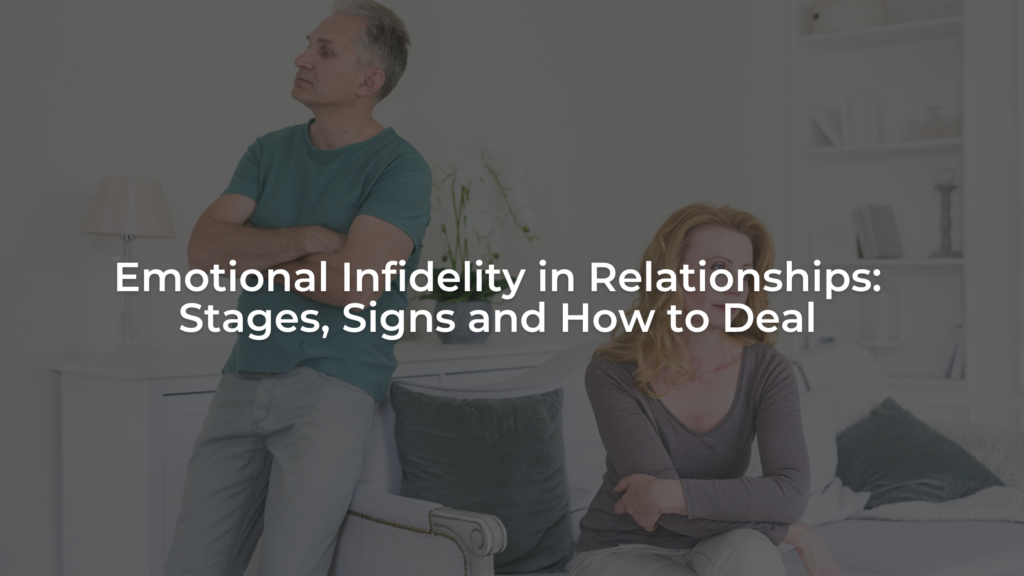
Emotional infidelity in relationships is one of the most painful and confusing experiences partners can face. Many people say it hurts even more than a physical affair because the betrayal happens at the level of the heart. It is not just about conversations or shared interests. It is about the emotional space that was supposed to belong to the relationship, becoming centered around someone else.
People often describe emotional affairs as feeling like a slow loss. A partner becomes distant, private, distracted, or suddenly invested in a connection outside the relationship. They laugh more with that person. They share personal secrets with them. They turn to them for comfort, validation, or emotional support. Over time, this emotional reliance becomes a substitute for intimacy within the relationship.
If you are struggling with emotional infidelity in relationships, one thing is important to understand. You are not overreacting. Emotional betrayal is real. The pain is real. And the confusion is real. As a couples therapist, Christina Wade, LMHC, supports individuals and couples through the complexity of emotional affairs. Her work focuses on rebuilding emotional safety, repairing communication, and helping partners understand how this breach developed.
This blog offers a complete guide to recognizing emotional infidelity, understanding how it unfolds, and learning how to heal from it with clarity and compassion.
What Exactly Is Emotional Infidelity?

Emotional Infidelity in Relationships happens when one partner forms a deep emotional connection with someone outside the relationship in a way that threatens the intimacy, trust, and emotional closeness of the primary partnership.
It is not about having friends. Healthy relationships allow friendships and emotional connections with others. Emotional infidelity becomes a concern when:
- The emotional bond becomes secretive
- The partner starts turning to someone else for comfort or validation
- Conversations are intimate in ways that exclude the partner
- The relationship begins to feel neglected or emotionally deprived
At its core, emotional infidelity shifts emotional investment away from the relationship and toward someone else. This shift can destabilize trust, connection, and security within the partnership.
Stages of Emotional Infidelity
Although every situation is different, emotional infidelity often develops in predictable stages. Understanding these stages helps partners see what went wrong and where the emotional boundary began to blur.
Stage One: Innocent Interest
This usually begins as a harmless connection. It may be a colleague, a friend, a familiar face at the gym, or someone who seems easy to talk to. There is no intention of betrayal at this point. Conversations feel normal and casual.
For many people, this stage feels comfortable because there is no emotional weight. But if the partner is feeling lonely, stressed, or disconnected at home, the bond can progress.
Stage Two: Emotional Curiosity
In this stage, the partner begins looking forward to interacting with the other person. They enjoy the attention, the conversations, or the sense of being seen. Small comparisons start forming in the back of their mind, such as:
“He understands me better.”
“She listens without judging me.”
Although the connection still looks innocent from the outside, it is building emotional momentum.
Stage Three: Increased Emotional Sharing
This is where emotional boundaries begin to blur. The partner begins sharing personal struggles, secrets, frustrations, or intimate thoughts with the new person instead of their spouse or partner. This creates emotional closeness that feels intimate in nature.
Many emotional affairs fully take root here.
Stage Four: Secrecy and Withdrawal
As the bond grows stronger, the partner may begin to hide messages, change phone habits, minimize interactions at home, or become emotionally unavailable. They withdraw from the relationship and direct emotional energy elsewhere.
Secrecy is not always intentional at first. It often begins with small omissions. But secrecy is the defining marker that the relationship is now threatened.
Stage Five: Emotional Dependence
At this point, the partner relies on the outside connection for validation, comfort, or emotional fulfillment. They think about the person often. They feel excited to interact with them. They may downplay or justify the connection to themselves.
Meanwhile, the primary relationship suffers. Communication breaks down. Intimacy fades. Tension increases. The emotional affair becomes the emotional priority.
Signs of Emotional Infidelity
Emotional affairs can be subtle, which is why many partners feel blindsided. You may notice shifts in behavior that do not immediately make sense.
Below are some common red flags:
- Secrecy around conversations
Sudden password changes, hiding notifications, deleting messages, or stepping outside to talk privately. - Emotional withdrawal from the relationship
Less affection, less interest in conversations, low emotional engagement. - Defensiveness about the new person
The partner insists the connection is “just a friend” while becoming angry when questioned. - Comparing you to the other person
Sometimes openly, sometimes indirectly through emotional reactions. - Increased irritability or criticism
Because emotional energy is spent elsewhere, the relationship feels heavier or annoying. - Obsessive connection
Thinking about the person often, texting them immediately when something happens, or prioritizing them for emotional processing. - Feeling “second place” emotionally
The betrayed partner begins to feel unimportant, invisible, or replaced.
Not all signs mean emotional infidelity is happening, but a pattern of several indicators deserves attention.
How Emotional Infidelity Affects the Relationship
Emotional betrayal often destabilizes a relationship in ways physical infidelity does not. The wound comes from the emotional displacement. You begin feeling like the emotional closeness that once belonged to you has been handed to someone else.
Common emotional impacts include:
- Feeling emotionally abandoned
- Lowered self-worth
- Difficulty trusting your partner
- Intrusive thoughts
- Fear of not being enough
- Heightened insecurity
- Emotional numbness or detachment
Some partners describe it as living with an invisible third person in the relationship. The emotional space becomes crowded with doubt, fear, and confusion.
What to Do If You Suspect Emotional Infidelity
Before reacting impulsively, it is important to ground yourself and take steps that help you communicate clearly.
Step One: Observe, Do Not Assume
Instead of jumping to conclusions, focus on what you are noticing. Pay attention to patterns rather than single incidents.
Step Two: Talk to Your Partner Calmly
Explain how you feel and what changes you have observed. Avoid accusations. Use emotional expression rather than blame.
For example:
“I have been feeling distant from you, and I am noticing changes in how we connect. Can we talk about what is going on between us?”
Step Three: Set Boundaries for Emotional Safety
Healthy boundaries might include:
- Transparency with communication
- Reduced private time with the other person
- Rebuilding intentional emotional closeness
- Clarifying needs and expectations
- Boundaries are not control. They are emotional protection.
Step Four: Assess the State of the Relationship
If both partners are willing to work, the relationship can recover and become stronger.
If one partner continues to deny, hide, or downplay, healing becomes more difficult without therapeutic help.
How to Heal from Emotional Infidelity

Healing is not passive. It requires intentional steps from both partners. Below are therapeutic strategies often used in Christina Wade’s sessions to support couples through emotional betrayal.
- Create Emotional Transparency
Both partners need to rebuild openness. This includes honest conversations about the emotional bond, the reasons behind it, and what is needed to heal. - Address the Root Causes
Emotional infidelity does not happen in isolation. Couples explore:
Emotional disconnection
Unmet needs
Communication issues
Attachment wounds
Individual emotional struggles
Understanding the cause prevents a repeat. - Rebuild Emotional Intimacy
Healing requires restoring emotional connection through:
Meaningful conversations
Shared activities
Emotional check-ins
Physical closeness at a natural pace
Emotional intimacy cannot be rushed, but it can be nurtured. - Reestablish Boundaries
Healthy relationships have clear emotional boundaries. Both partners must agree on what emotional behavior is appropriate with others. - Allow the Hurt Partner to Process
The betrayed partner may feel angry, sad, or confused for weeks or months. Healing requires patience, empathy, and reassurance from the partner who betrayed. - Develop New Relationship Rituals
Small consistent behaviors rebuild trust, such as:
Evening check-ins
Shared hobbies
Weekend rituals
Open phone policies
Rituals help stabilize emotional closeness again. - Seek Professional Guidance
Emotional infidelity often requires skilled support. A therapist provides:
Neutral space
Emotional clarity
Structure for communication
Tools to rebuild trust
This is especially important when both partners want to repair the relationship but feel overwhelmed by emotion.
Helpful Overview Table
| Area Impacted | How Emotional Infidelity Affects It | What Helps Heal |
| Trust | Creates uncertainty and insecurity | Transparency, consistent actions |
| Intimacy | Emotional closeness decreases | Shared bonding activities |
| Communication | Arguments or withdrawal increase | Structured conversations |
| Self worth | The betrayed partner feels inadequate | Reassurance and emotional validation |
| Relationship stability | Partners lose emotional safety | Clear boundaries and therapy |
When to Seek Therapy
If the relationship feels stuck between hurt and confusion, therapy becomes essential. Many couples find emotional infidelity harder to overcome than physical betrayal because the emotional wound runs deeper.
Working with Christina Wade, LMHC, helps partners:
- Understand how the emotional affair developed
- Rebuild emotional connection
- Reprocess the emotional trauma
- Learn healthier communication strategies
- Rebuild trust through structured steps
- Decide whether reconciliation is the right path
Therapy provides guidance, clarity, and emotional grounding when the situation feels overwhelming.
Final Thoughts
Emotional infidelity in relationships, painful, and deeply destabilizing. But it does not have to be the end of your relationship. With honesty, boundaries, emotional openness, and the right support, couples can heal from emotional betrayal and rebuild a stronger connection than before.
Healing takes time. You do not need to rush. You do not need to face the pain alone. Whether you choose to stay, rebuild, or walk away, you deserve clarity, emotional safety, and inner peace. Healing begins with willingness and continues through compassion, accountability, and consistent effort.
Key Takeaway
Emotional infidelity in relationships breaks trust, but with awareness, effort, and structured healing, couples can restore emotional closeness. Real repair comes from understanding why the emotional betrayal happened, rebuilding intimacy intentionally, and practicing transparency and emotional honesty every day.
Contact Christina Wade
If you are struggling with emotional infidelity or emotional disconnection, Christina offers a warm, non-judgmental space to help you heal and find clarity.
Phone: 929-310-9241
Email: christinawadetherapy@gmail.com
Location: New York, NY


