
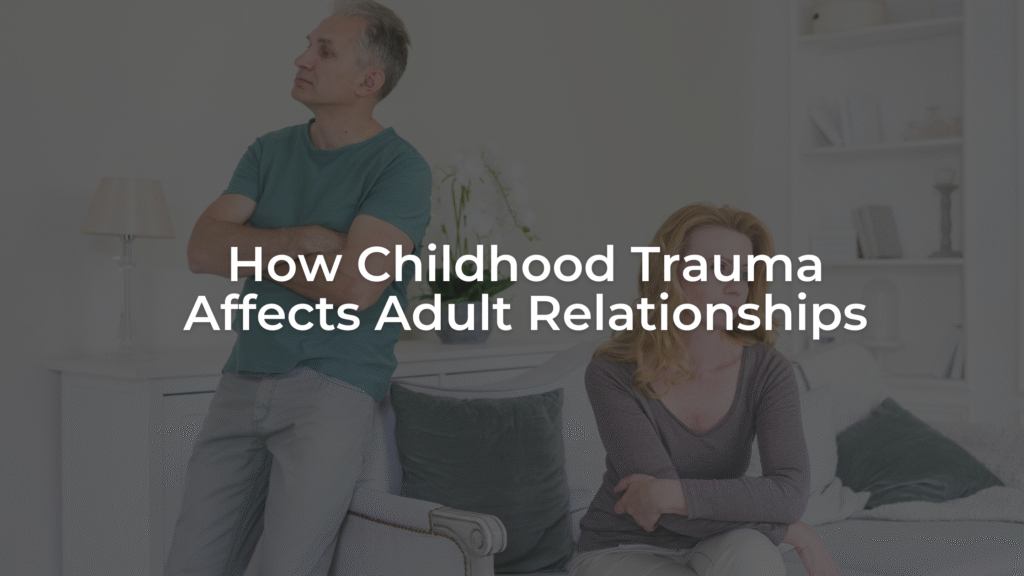
Childhood experiences shape how we learn to trust, connect, and feel safe with others. When early life includes trauma—such as emotional neglect, abuse, chaos, or inconsistent caregiving—those experiences often resurface in adulthood, especially within close relationships. Romantic partnerships activate our deepest attachment systems, which is why unresolved childhood trauma can strongly influence how we love, communicate, and respond to conflict.
Why Childhood Trauma Impacts Adult Relationships
Childhood trauma occurs when experiences overwhelm a child’s ability to cope. Because the brain and nervous system are still developing, these experiences become embedded in emotional and relational patterns.

Trauma can shape:
- How safe vulnerability feels
- Expectations around closeness or abandonment
- Emotional expression and regulation
- Core beliefs about self-worth
- Ability to trust others
In adulthood, intimate relationships often activate these early attachment patterns—sometimes unexpectedly.
Common Ways Childhood Trauma Shows Up in Relationships

Difficulty Trusting
Early unpredictability can lead to constant scanning for danger, even in healthy relationships. This may look like overanalyzing, expecting betrayal, or struggling to receive care.
Fear of Abandonment
Emotional distance, conflict, or a partner needing space can trigger intense anxiety, people-pleasing, or fear of being left.
Emotional Numbness or Shutdown
Some individuals learned to survive by disconnecting from feelings. As adults, this may appear as emotional withdrawal, difficulty expressing needs, or shutting down during intimacy.
Heightened Reactivity to Conflict
Disagreements may feel threatening rather than manageable. The nervous system reacts as if survival is at stake, leading to defensiveness, anger, or withdrawal.
Repeating Unhealthy Patterns
People often gravitate toward familiar dynamics—emotionally unavailable, controlling, or chaotic relationships—not by choice, but because they feel known.
Low Self-Worth
Early criticism or neglect can become internalized beliefs such as “I’m not enough” or “I don’t deserve love,” impacting boundaries and self-advocacy.
These patterns are not character flaws—they are learned survival strategies.
How Healing Changes Relationships
When childhood trauma is processed, relationships begin to feel safer and more stable. Healing supports the ability to:
- Regulate emotions more effectively
- Communicate needs without shame
- Choose healthier partners
- Experience closeness without fear
- Respond rather than react during conflict
Therapy Approaches That Support Healing
At Elevated Solutions Therapy, trauma-informed care focuses on both emotional and relational healing. Common approaches include:
- Cognitive Behavioral Therapy (CBT): Challenges trauma-shaped beliefs
- Emotionally Focused Therapy (EFT): Builds secure attachment
- Internal Family Systems (IFS): Works with protective and wounded parts
- Somatic Therapy: Regulates the nervous system and restores safety
- Mindfulness-Based Therapies: Reduce reactivity and increase awareness
Healing is possible at any stage of life.
When to Seek Support
Therapy may be helpful if you notice:
- Repeating relationship patterns
- Intense reactions to conflict or closeness
- Fear of abandonment or rejection
- Emotional numbness or shutdown
- Difficulty trusting supportive partners
Final Thoughts
Childhood trauma explains relationship patterns—it does not define your worth or your future. With insight, compassion, and the right therapeutic support, survival-based responses can transform into secure, meaningful connection.
At Elevated Solutions Therapy, we help individuals heal relational wounds and build healthier, more fulfilling relationships rooted in safety, trust, and emotional clarity.


